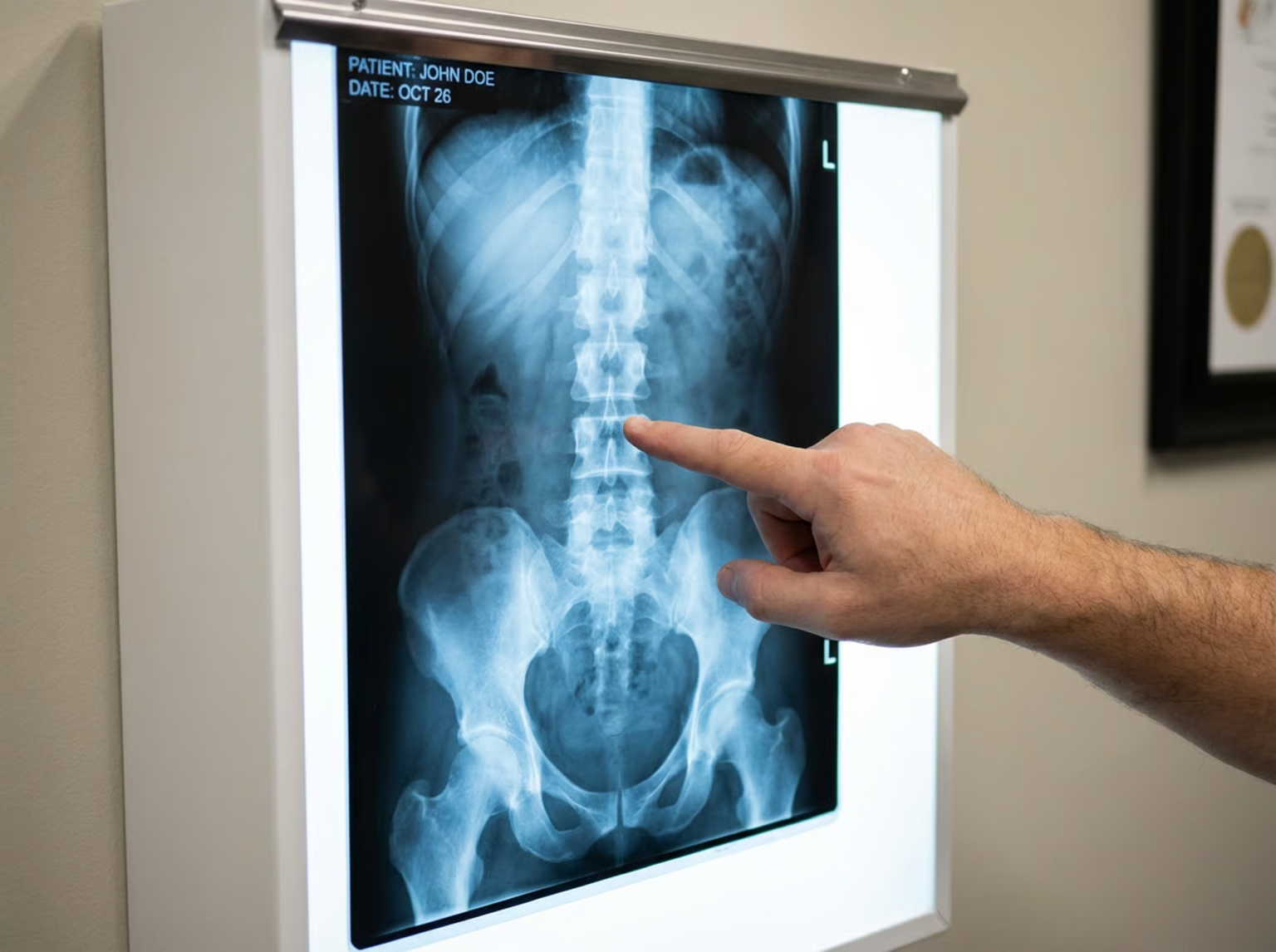
The Purpose of X-rays in Chiropractic Assessment
Chiropractors rely on X-rays as a powerful diagnostic tool to see what's happening beneath the surface of your body. These images reveal the alignment of your spine, joint spacing, and bone integrity that can't be assessed through physical examination alone.
Your chiropractor may order X-rays to detect specific conditions like arthritis, fractures, or abnormal curvatures before beginning treatment. They're particularly valuable for identifying contraindications—situations where certain adjustments might harm rather than help you.
X-rays also provide objective documentation of your current condition, creating a baseline for tracking your progress throughout care. They help your chiropractor develop a precise, personalized treatment plan tailored to your unique structural issues, ensuring safer and more effective adjustments.
Clinical Indicators: When X-rays Are Medically Necessary
Although not every chiropractic visit requires imaging, certain clinical scenarios make X-rays medically necessary. You'll likely need X-rays if you've experienced trauma, like car accidents or falls, where fractures or dislocations are suspected. Persistent pain that doesn't respond to initial treatment warrants imaging to rule out serious conditions.
X-rays are essential if you're exhibiting neurological symptoms such as numbness, weakness, or radiating pain, which may indicate nerve compression. They're also necessary if your chiropractor detects significant spinal abnormalities during physical examination.
Age-related factors matter too—if you're over 50 or have osteoporosis risk factors, X-rays help assess bone density and detect degenerative changes. Similarly, if you have a history of cancer, unexplained weight loss, or persistent night pain, imaging becomes crucial to exclude pathological causes.
What Spinal X-rays Can Reveal That Physical Exams Cannot
While physical examinations provide valuable information about your spinal health, X-rays unveil critical structural details invisible to even the most skilled practitioner's hands. They can detect bone density issues, revealing early signs of osteoporosis before symptoms appear. X-rays also identify exact vertebral positions, showing misalignments that cause referred pain far from their source.
Only radiographic imaging can confirm congenital anomalies like vertebral fusion, transitional segments, or spina bifida occulta. These conditions significantly impact treatment decisions. X-rays reveal degenerative changes, including disc thinning, bone spurs, and facet joint arthritis—conditions you might not yet feel but that require specific care approaches.
When trauma has occurred, X-rays can detect subtle fractures or instability that physical tests might miss, ensuring your treatment plan addresses underlying structural issues.
Radiation Considerations and Safety Protocols
Many patients express concerns about radiation exposure when X-rays are recommended, yet modern chiropractic facilities implement rigorous safety protocols that minimize risks. Today's digital X-ray equipment uses up to 80% less radiation than older film systems, significantly reducing your exposure.
During your X-ray, you'll receive lead shielding to protect sensitive areas, and your chiropractor will limit the number of images to only those clinically necessary. Most practices follow the ALARA principle—"As Low As Reasonably Achievable"—when determining X-ray needs.
For context, a typical spine X-ray series exposes you to roughly the same radiation as 2-3 days of natural background radiation. Pregnant women and children receive special considerations, with alternatives often recommended unless X-rays are absolutely essential.
The Diagnostic Value of Different X-ray Views
Different X-ray views provide unique insights into your spine's condition, each revealing specific aspects that might remain hidden from a single angle. Anteroposterior (front-to-back) views showcase the spine's alignment, scoliosis, or lateral shifts. Lateral (side) views highlight lordosis, kyphosis, and forward head posture while revealing disc space narrowing and vertebral compression.
Oblique views expose facet joints and foramen openings where nerves exit your spine. Flexion-extension studies demonstrate spinal instability or hypomobility when you bend forward and backward. Specialized views like weight-bearing films show how your spine functions under natural gravitational stress.
Your chiropractor will select specific views based on your symptoms and clinical findings. This targeted approach maximizes diagnostic value while minimizing radiation exposure, ensuring you receive only the most relevant imaging for your condition.
How X-ray Findings Influence Treatment Plans
X-ray findings serve as a critical roadmap that guides your chiropractor's treatment approach, revealing structural issues that might otherwise remain hidden during physical examination alone. When images show spinal misalignments, your chiropractor can precisely target specific vertebrae requiring adjustment rather than using generalized techniques.
X-rays revealing degenerative conditions like arthritis or disc thinning will prompt your provider to modify treatments, avoiding aggressive manipulations that could worsen these conditions. For patients with osteoporosis or spinal instability, these images help determine if gentler techniques are necessary.
Additionally, x-ray findings often influence treatment frequency and duration. Severe structural problems may require more intensive initial care, while monitoring x-rays can track your progress and help your chiropractor adjust your treatment plan as your spine responds to care.
The Evolving Role of Digital Imaging in Modern Chiropractic
Modern chiropractic practices have increasingly embraced digital imaging technology, transforming how practitioners visualize, analyze, and communicate spinal conditions to their patients. Digital X-rays offer superior image quality with significantly less radiation exposure than traditional films, enhancing both diagnostic accuracy and safety.
You'll notice the difference during your appointment. Your chiropractor can instantly capture, enhance, and manipulate images on a computer screen, allowing for immediate assessment of your spine. Digital systems also enable precise measurements and side-by-side comparisons of images from different dates, helping track your progress over time.
These advancements foster better patient education as your chiropractor can zoom in on problem areas and clearly explain findings, leading to improved treatment understanding and compliance.