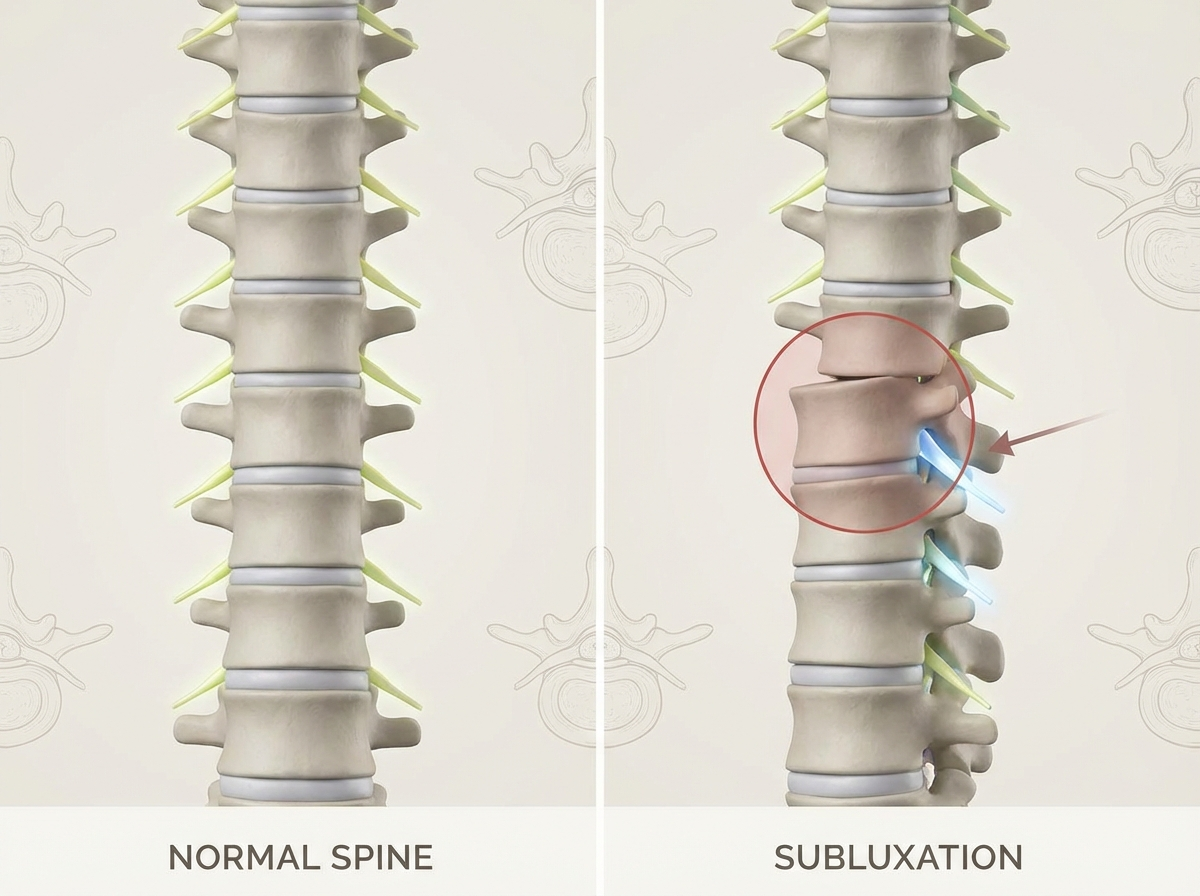
What Is Subluxation? Defining the Spinal Misalignment
Subluxation, a term commonly used in chiropractic care, refers to a partial dislocation or misalignment of the vertebrae in your spine. When these vertebrae shift from their normal position, they can put pressure on the surrounding nerves, disrupting the communication between your brain and body.
Think of your spine as an information superhighway. When subluxations occur, they're like roadblocks that impede the flow of vital neurological signals. This interference can manifest as pain, reduced mobility, or even affect your body's ability to function optimally.
You might develop subluxations through physical trauma, poor posture, repetitive movements, or even stress. What makes them particularly concerning is that you can have subluxations without immediately noticeable symptoms, potentially allowing the problem to worsen before you seek treatment.
The Science Behind Vertebral Subluxation Complex
How exactly does a vertebral misalignment affect your entire body? The Vertebral Subluxation Complex (VSC) explains this through five interconnected components. First, spinal misalignments create abnormal motion and positioning (kinesiopathology). This triggers inflammation and swelling (histopathology), disrupting nearby nerve function (neuropathology). Your muscles then respond with spasm, weakness, or fibrosis (myopathology).
Over time, these changes lead to degenerative alterations in bone, cartilage, and soft tissues (pathophysiology). Most critically, subluxations compress nerves exiting your spinal column, interfering with signals traveling to and from your brain. This neural interference prevents optimal communication between your brain and body systems, potentially impacting everything from organ function to immune response. That's why chiropractors focus on correcting subluxations—to restore proper nervous system communication.
How Subluxation Affects Your Nervous System Function
Your central nervous system—the master control network for your entire body—suffers significant disruption when vertebrae shift out of alignment. These subluxations compress and irritate spinal nerves, interfering with the transmission of vital nerve impulses. Think of it as stepping on a garden hose; the water flow diminishes immediately.
When nerve communication breaks down, your body can't function optimally. Organs receive incomplete instructions, muscles weaken, and your immune response may falter. You'll likely experience pain first—your body's warning signal—but the effects extend far beyond discomfort. Even minor subluxations can trigger cascading problems throughout your body systems.
What's concerning is that you won't always feel these disruptions immediately. Your nervous system can compensate temporarily, masking the problem until more serious symptoms develop downstream.
Beyond Back Pain: Systemic Health Effects of Subluxation
While most people associate spinal misalignments with localized back pain, the consequences of subluxation extend far beyond the spine itself. When vertebrae compress nearby nerves, they disrupt communication throughout your body's control network.
This interference can manifest as digestive issues, with patients reporting improvements in acid reflux and irritable bowel syndrome after adjustment. Your immune function may suffer as neural signals to immune organs become compromised. Many experience headaches, fatigue, and sleep disturbances from upper cervical subluxations.
Even your mood isn't immune—anxiety and depression can develop from chronic neural interference. Respiratory function, heart rate, and blood pressure regulation all depend on proper nerve flow. Your body works as an interconnected system, making spinal health crucial for overall wellness, not just pain management.
Recognizing the Warning Signs of Spinal Misalignment
Recognizing the signs of spinal misalignment often begins with understanding your body's subtler signals, not just waiting for pain to emerge. Beyond the obvious backache, watch for recurring headaches, especially those originating at the base of your skull. Unexplained dizziness, tingling in your extremities, or one shoulder sitting higher than the other can indicate subluxation.
You might notice decreased range of motion when turning your head or persistent muscle tension in your neck and shoulders. Uneven wear on your shoes, difficulty maintaining balance, or chronic fatigue without cause deserve attention. Sleep disturbances and digestive issues can also stem from spinal problems. If you experience shooting pain down your arms or legs, don't ignore it—this nerve compression requires prompt evaluation.
Corrective Approaches to Addressing Subluxation
Once symptoms of subluxation have been identified, effective treatment options can begin. Most chiropractors use targeted spinal adjustments to realign vertebrae and restore proper nerve function. These manual manipulations often provide immediate relief while addressing the underlying misalignment.
Beyond adjustments, your treatment plan may include corrective exercises designed to strengthen supporting muscles and improve posture. Therapeutic stretches can enhance flexibility in tight areas contributing to subluxation. Many practitioners also recommend lifestyle modifications like ergonomic improvements, better sleep positions, and proper lifting techniques.
For optimal results, you'll likely need a series of treatments rather than a one-time fix. Your chiropractor might incorporate complementary therapies such as massage, ultrasound, or electrical stimulation to enhance healing. The goal isn't just symptom relief but creating lasting structural improvements that prevent future subluxations.